
Best Freelance Jobs You Can Do From Home in 2026
You do not need a degree to freelance. You do not need years of experience. What you need is one skill, a device, and the willingness to start.
In 2026, freelancing is more accessible than ever before. Platforms connect beginners with paying clients every single day. Moreover, most in-demand skills can be learned in weeks — not years. That is why so many people are making the switch to freelance work right now.
Whether you want to replace a full-time income or earn an extra few hundred dollars a month, this guide is for you. Below you will find the ten best freelance jobs for beginners — with honest pay estimates and clear advice for landing your first client.
Why Freelancing Makes Sense in 2026
Traditional employment offers fixed hours and a single income source. Freelancing offers something better. It gives you direct control over your earnings.
Because you set your own rates, your income grows as your skills improve. You do not need a manager’s approval for a pay rise. Additionally, remote work culture means your location no longer matters. Whether you live in a city or a small town, you can access the same global pool of clients.
However, freelancing does require consistency. That is why the freelancers who succeed fastest are not always the most talented — they are the most reliable.
| 💡 Pro Tip: Show up every day. Communicate professionally. Deliver on time. Because those three habits alone will take you further than raw skill ever could. |
1. Freelance Writing
Freelance writing is one of the most beginner-friendly online income paths available. Businesses, blogs, and agencies all need written content constantly. Yet there are far more clients who need writers than there are skilled writers available. That gap is your opportunity.
You do not need previous publishing credits to start. Clients care about clear, well-structured writing. So if you can communicate ideas effectively, you already have the foundation.
What You Will Write
Blog posts and articles are the most common starting point. However, as your portfolio grows, you can move into higher-paying formats. For example, website copywriting, email sequences, and white papers all pay considerably more than basic blog content.
How Much You Can Earn
Beginner writers typically charge $15 to $50 per article. However, this increases quickly as your portfolio builds. Intermediate writers who specialize in a niche — such as technology or finance — commonly earn $100 to $300 per article. Moreover, specialist copywriters who write sales pages can earn even more. That is because their work directly drives measurable revenue for clients.
How to Start
Write three to five samples on topics you know well. Then publish them on Medium or a free portfolio page. After that, begin applying for entry-level gigs on Upwork, Fiverr, or Freelancer.com. Your first clients will be your most valuable learning experience.
2. Virtual Assistant (VA)
A virtual assistant provides remote support to businesses and entrepreneurs. Tasks include email management, scheduling, research, data entry, and customer support. Because these are skills most people already use in daily life, VA work suits complete beginners very well.
Even if you have never worked online before, you have probably managed emails and organized files. In fact, those everyday habits are exactly what clients pay for.
Common VA Tasks
- Inbox management and professional email correspondence
- Calendar scheduling and appointment booking
- Social media scheduling and basic content posting
- Data entry and spreadsheet organization
- Customer service and live chat support
- Research tasks and report summaries
- Travel booking and logistics coordination
How Much You Can Earn
Entry-level VAs typically earn $12 to $20 per hour. However, VAs who develop specialized skills earn significantly more. For example, a VA who manages Facebook Ads or uses HubSpot can charge $35 to $75 per hour. That is because the value they deliver to clients is much higher. So rates reflect that increased value directly.
How to Start
List the skills you already have. Then create a simple one-page service menu with your starting rate. After that, pitch on Fiverr, Upwork, or in Facebook Groups where business owners look for support.
3. Social Media Management
Every business needs a social media presence. However, most business owners do not have the time to manage it consistently. That gap creates enormous demand for social media managers. Moreover, you do not need a marketing degree to fill it.
Many small business clients simply need someone to post consistently, respond to comments, and design basic graphics. Because tools like Canva and Buffer are free and easy to learn, you can develop these skills within a few weeks.
What the Work Involves
Social media management includes writing captions, designing visuals in Canva, scheduling posts, and tracking engagement. As your skills develop, you can add short-form video editing using CapCut. Furthermore, most clients pay on a monthly retainer. That means your income becomes predictable — even without constantly finding new projects.
How Much You Can Earn
Beginner social media managers typically charge $200 to $500 per month per client. That might sound modest at first. However, with three to five clients, you earn $1,000 to $2,500 monthly. Additionally, because these are ongoing retainer relationships, you do not constantly need to hunt for new work. That is one of the biggest advantages of this career path.
4. Graphic Design
Graphic design once required expensive software and years of formal training. In 2026, that is no longer true. Tools like Canva have lowered the barrier dramatically. So even a beginner who understands basic design principles can start offering services to small businesses.
However, if you want to build a long-term design career, learning Adobe Photoshop or Illustrator will expand your capabilities. Both offer free trials, and tutorials are widely available on YouTube for free.
In-Demand Design Services for Beginners
- Social media graphics and reusable templates
- Logo design for small businesses and personal brands
- Pinterest pin design — extremely high demand from bloggers and Etsy sellers
- eBook covers and digital product graphics
- Business card and brand kit design
- Presentation design and slide decks
How Much You Can Earn
Beginners using Canva typically charge $15 to $50 per graphic. However, those with Adobe skills can charge $50 to $150 or more. For example, logo packages for small businesses often start at $150 to $500. So the earning potential grows fast once you have examples to show.

5. Video Editing
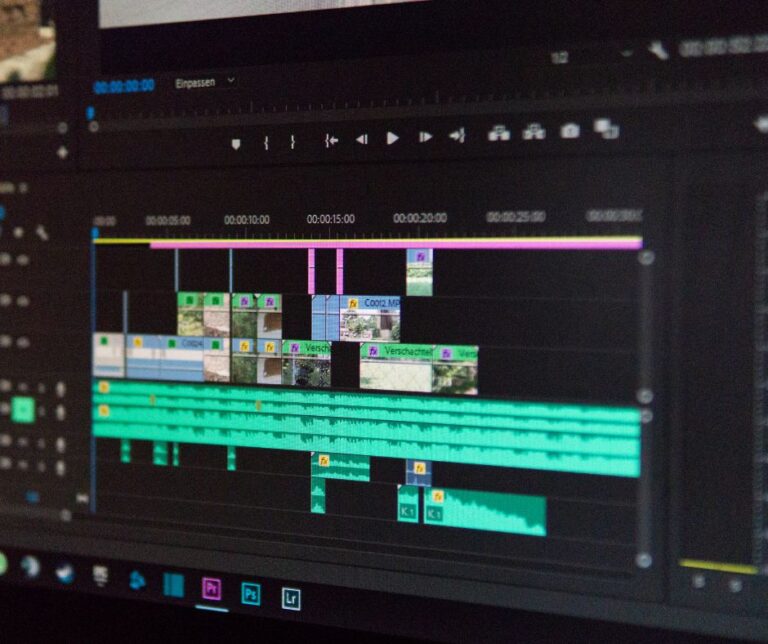
Video is the dominant content format in 2026. YouTube, TikTok, Instagram, and LinkedIn all prioritize it heavily. As a result, demand for skilled video editors has skyrocketed. Yet supply has not kept pace. That is a genuine opportunity for beginners willing to learn.
CapCut is the most exciting tool for new editors right now. It is free, AI-powered, and works on both mobile and desktop. Moreover, its AI features speed up the editing process dramatically. That means you can take on more clients in less time.
Types of Video Editing Work
- YouTube video editing — cuts, transitions, music, and subtitles
- Short-form video for TikTok, Reels, and YouTube Shorts
- UGC video editing for brands
- Podcast video editing and audiogram creation
- Corporate explainer and training video editing
How Much You Can Earn
Entry-level editors typically charge $15 to $50 per video. However, as your skills grow, rates of $75 to $200 per video are very achievable. Furthermore, editors who specialize in YouTube content for established channels often earn $300 to $500 per video. Because the demand is so high, skilled editors rarely struggle to find work.
| 🎬 Tool Tip: CapCut is completely free. It includes AI auto-captions, background removal, and trending templates. Because it is so beginner-friendly, it is one of the fastest ways to build a portfolio-ready editing skill set in 2026. |
6. Proofreading and Editing
Do you notice spelling errors instantly? If so, proofreading might be your most natural freelance path. Professional proofreading is in constant demand. Authors, bloggers, businesses, and non-native English speakers all need their writing reviewed before publishing.
However, proofreading and editing are not the same thing. Proofreading covers surface errors — spelling, punctuation, grammar. Editing improves structure, flow, and clarity. Although editing is more involved, it pays considerably more as a result.
How Much You Can Earn
Proofreaders typically charge $0.01 to $0.03 per word. That equals $10 to $30 per 1,000 words. However, copy editors who work at a deeper level charge $0.03 to $0.07 per word. Moreover, an experienced proofreader who works efficiently can process several thousand words per hour. So the effective hourly rate becomes very attractive.

7. Transcription
Transcription means converting audio or video recordings into written text. Because it requires no specialized knowledge beyond typing speed and attention to detail, it is one of the most beginner-accessible freelance jobs available. Businesses, researchers, podcasters, and legal professionals all need it regularly.
General transcription suits complete beginners. However, specialized fields like legal and medical transcription pay significantly higher rates. So if you are willing to invest in short additional training, the income gap is substantial.
How Much You Can Earn
General transcription typically pays $15 to $25 per audio hour. However, legal and medical transcriptionists commonly earn $25 to $45 per audio hour. That is because specialist knowledge commands a premium. So the investment in specialized training pays back quickly.
8. Online Tutoring and Teaching
Do you have expertise in any subject? Mathematics, languages, music, coding, or business skills are all in demand. Moreover, the required expertise does not need to be academic. Teaching conversational English, coaching photography beginners, or tutoring someone in Excel are all legitimate and well-paid services. None of them require a formal qualification.
Online tutoring is one of the most personally rewarding freelance paths. That is because you directly help people learn something new. Furthermore, the income potential grows quickly with specialization.
How Much You Can Earn
Online tutors typically charge $15 to $40 per hour for general subjects. However, specialists in high-demand areas can charge $50 to $150 per hour. For example, programming tutors and test preparation coaches regularly earn at the higher end. In addition, creating pre-recorded courses adds a passive income stream on top of active tutoring sessions.
9. Data Entry and Research
Data entry is the most accessible freelance starting point for complete beginners. Because it only requires basic computer literacy and attention to detail, almost anyone can offer it immediately. Although it is one of the lower-paying categories, it is an excellent entry point while you develop other skills.
Research services pay better. Compiling information, creating lead lists, or summarizing reports all require more judgment. So if you position yourself as a research specialist — rather than a data entry operator — your rates increase considerably.
How Much You Can Earn
Data entry typically pays $8 to $15 per hour. However, research services command $15 to $35 per hour. That is because research requires analytical thinking, which means clients are willing to pay more for it.

10. UGC Content Creation
User-generated content (UGC) creation is one of the most exciting new freelance opportunities of 2026. UGC creators produce authentic photo or video content that brands use in their paid advertising. Moreover, the remarkable thing is that you do not need a social media following to get paid for this work.
Brands pay for UGC because it converts better than polished studio advertising. That is because consumers trust content that looks real. So a well-made smartphone video can outperform an expensive production. Furthermore, you keep full creative control over your style and approach.
How Much You Can Earn
UGC creators typically charge $50 to $300 per piece of content. However, established creators with strong portfolios earn $500 to $1,500 per deliverable for premium brands. Because you post content to the brand’s channels — not your own — you do not need to build a following first. That is what makes this opportunity so accessible.
How to Land Your First Freelance Client: A 6-Step Action Plan
Understanding the opportunities is valuable. However, the real question every beginner has is simple: how do I actually get hired? Here is a straightforward plan that works even without a portfolio or testimonials.
- Choose one service to start with. Because trying to offer everything at once confuses clients, focus on the service that aligns most with your current skills.
- Create two or three portfolio samples. These do not need to be paid work. For example, write a sample blog post, design three social media graphics, or edit a practice video.
- Set a competitive beginner rate. Because you are trading income for experience and reviews, starting slightly below market rate is a smart short-term strategy.
- Apply on multiple platforms simultaneously. That is because different clients use different platforms. Apply on Upwork, Fiverr, and LinkedIn at the same time.
- Write personalized proposals. Generic proposals are immediately ignored. So read each job posting carefully and address the client’s specific needs directly.
- Deliver excellent work, then ask for a review. Because your first few reviews are your most valuable asset, over-deliver on early projects and then politely request a testimonial.
Final Thoughts
The freelance economy in 2026 rewards those who start before they feel completely ready. Every successful freelancer was once exactly where you are now — uncertain, inexperienced, and wondering whether it was possible.
It is possible. However, it starts with one decision: picking a service and reaching out to your first potential client today.
Because the longer you wait, the longer someone else is building the experience — and the income — that could be yours.
Latest blog posts
- Systeme.io Review: The All-in-One Platform That Replaces 7 Tools at Once
 Most online entrepreneurs pay for too many tools. Because a typical setup includes an email platform, a funnel builder, a course host, a landing page tool, and an affiliate manager, monthly costs easily reach $200 to $400. Moreover, managing five separate logins and integrations wastes hours every month. Systeme.io promises to solve this problem entirely….
 - How to Make Faceless AI Videos That Earn Money
 Faceless video content generates real income in 2026. Moreover, it does so without requiring you to appear on camera, build a personal brand, or invest in filming equipment. Because AI tools now handle scripting, voiceover, visuals, and even on-screen presence, the production barrier has effectively disappeared. However, most guides on this topic promise automated income…
 - Best AI Video Tools for Content Creators in 2026
 Video dominates every platform in 2026. Moreover, creators who produce it consistently reach far larger audiences than those who publish only text or images. However, video production traditionally required expensive software, technical skill, and significant time. AI tools have changed that completely. Because scripting, voiceover, editing, captioning, and even on-screen presence can now be handled…
 - HumanTalk Review: AI Text-to-Speech That Sounds Like a Real Person
 AI voice tools have transformed content creation. Moreover, they have made faceless YouTube channels, UGC videos, and audiobook production accessible to people who would never record their own voice. However, most quality AI voice platforms charge $22 to $99 every month — which adds up quickly for creators just starting out. HumanTalk takes a different…
 - VideoCreator Review: Can You Really Make Money With This AI Video Software?
 Video content dominates every platform in 2026. Moreover, businesses of every size need it constantly. Because most small business owners lack the skills, time, or budget to produce video themselves, a genuine market gap exists for creators who can fill it. VideoCreator promises to close that gap. Because it offers a template-driven, cloud-based video editor…