
Affiliate Marketing vs Dropshipping: Which Is Better for You
Two of the most popular ways to make money online — affiliate marketing and dropshipping — often get compared side by side. And for good reason: both let you earn income from home, without creating your own products or holding inventory.
But they work very differently. The right choice for you depends on your goals, your personality, your available time, and your starting budget. In this guide, we’ll break down both models honestly, compare them across every key dimension, and help you figure out which one — or which combination — is the perfect fit for your online business journey.
What Is Affiliate Marketing (Quick Recap)
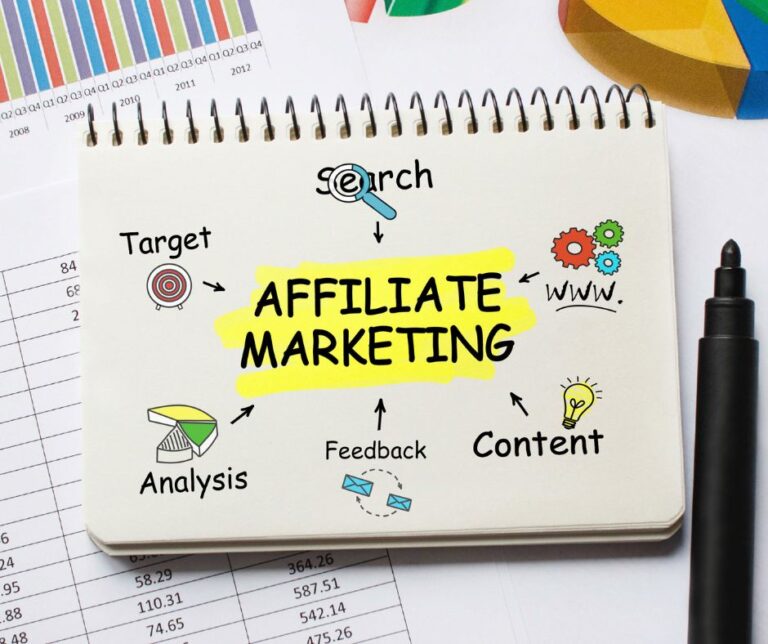
With affiliate marketing, you earn a commission by recommending other people’s products. You get a unique tracking link, share it through your content (blog, Pinterest, YouTube, social media), and earn money whenever someone clicks and buys.
Your role: create content and drive traffic. Someone else handles the products, fulfillment, customer service, and everything after the click.
What Is Dropshipping (Quick Recap)
With dropshipping, you run an online store and sell physical products — but you never touch the inventory. When a customer orders from your store, you purchase the item from a supplier (like those found on Syncee), who ships it directly to your customer.
Your role: run the store, market the products, and handle customer service. The supplier handles production and shipping.
Side-by-Side Comparison
| Affiliate Marketing | Dropshipping | |
| Startup cost | Free to start | $0 – $500+ (store + apps) |
| Time to first income | 3 – 6 months (SEO-based) | 2 – 8 weeks (if ads used) |
| Income type | Passive / semi-passive | Active (order management) |
| Scalability | Very high (content compounds) | High (with automation) |
| Customer service | None required | Required (your responsibility) |
| Product creation | Not needed | Not needed |
| Inventory | Not needed | Not needed |
| Profit per sale | 3% – 50% commission | 10% – 40% profit margin |
| Traffic source | SEO, Pinterest, social | Paid ads (usually) |
| Risk level | Very low | Low to medium |
| Best for | Writers, bloggers, creators | Entrepreneurs, product-focused |
Startup Costs: Affiliate Marketing Wins Easily
Affiliate marketing is genuinely free to start. You can open a Pinterest account, write articles on Medium, or start a YouTube channel — all at zero cost. Even when you add a blog (which is recommended for long-term growth), you’re looking at $3-10 per month for hosting.
Dropshipping requires more upfront investment. A Shopify store costs a monthly subscription fee, and you’ll likely need apps for supplier integration (like Syncee), product research tools, and potentially paid advertising to drive traffic to your store. You could start lean, but realistic startup costs are $50-200 per month before you see consistent sales.
| Verdict:Affiliate marketing wins for those with no starting budget. Dropshipping is more accessible than traditional retail but still requires some investment. |
Time to First Income: Dropshipping Can Be Faster
This is where dropshipping has a genuine advantage — especially if you use paid advertising. It’s possible to make your first dropshipping sale within a week or two if you find a winning product and run targeted ads.
Affiliate marketing income, particularly the SEO-based variety we focus on at Miss Home Office, typically takes 3-6 months to build meaningfully. You’re planting seeds, not harvesting crops. Pinterest can speed this up by driving traffic before Google kicks in, but patience is definitely required.
| Verdict: Dropshipping can produce income faster, especially with paid ads. But faster income comes with higher risk and ongoing ad costs. Affiliate marketing takes longer but builds compounding, passive income. |
Ongoing Work: Affiliate Marketing Is More Passive
Once an affiliate content piece — a blog post, YouTube video, or Pinterest pin — starts ranking and driving traffic, it can earn commissions on autopilot with minimal maintenance. Your work was done at creation time.
Dropshipping is more operationally demanding. Every day brings orders to process, supplier communication, customer service inquiries, return requests, and the ongoing need to test new products and ad creatives. It’s less passive and more like running a proper business — which is genuinely rewarding if that’s what you enjoy.
| Verdict:Affiliate marketing is more hands-off and passive. Dropshipping is more like an active business that rewards strong operators. |
Profit Potential: Both Can Scale Significantly
Both models have legitimate six and seven-figure success stories. The ceiling is high in both cases — but the path looks different.
Affiliate Marketing Income Drivers
- Traffic volume to your content (more articles + better SEO = more readers).
- Quality of affiliate programs (high-ticket affiliates like Shopify at $150/referral vs low-commission programs).
- Content compounding — old articles keep earning without extra work.
Dropshipping Income Drivers
- Finding winning products (requires testing and research).
- Ad performance (return on ad spend is the key metric).
- Conversion rate optimization (better store = more sales from same traffic).
- Supplier reliability (directly affects customer satisfaction).
Risk: Affiliate Marketing Is Much Lower Risk
In affiliate marketing, your primary risk is time — and only time. If a piece of content doesn’t perform, you haven’t lost money, only effort.
In dropshipping, there’s real financial risk involved. Ad spend can disappear with no return if you’re testing the wrong product. Supplier issues can lead to customer complaints. Chargebacks and returns eat into margins. These are manageable risks, but they’re real.
| Verdict:Affiliate marketing has nearly zero financial risk. Dropshipping has low-to-medium risk that can be managed with careful product selection and conservative ad spending. |
Which One Is Right for You?
Here’s a simple way to decide:
Choose Affiliate Marketing if…
- You enjoy writing, creating content, or making videos.
- You want to start with zero budget.
- You value passive income and don’t want to manage customer service.
- You’re patient and willing to invest 6-12 months before seeing significant results.
- You want an asset that grows in value over time.
Choose Dropshipping if…
- You’re entrepreneurial and enjoy running a business with moving parts.
- You have some starting budget for store setup and initial ads.
- You want to see income results faster (weeks rather than months).
- You enjoy product research, marketing, and optimization.
- You’re comfortable with some financial risk in exchange for faster results.
The Winning Combination: Why Not Both?
Here’s a strategy many successful online entrepreneurs use: start with affiliate marketing to generate your first online income while learning the landscape, then use those earnings and insights to fund a dropshipping store in a niche you already understand.
For example: you build an affiliate blog about print-on-demand and home office products. Once your affiliate income covers your business costs, you launch a dropshipping store in the same niche — now with an audience already built, content already ranking, and a deep understanding of what your customers actually want.
Both models complement each other beautifully, and starting with affiliate marketing first gives you valuable market research for free.
Our Recommendation at Miss Home Office
If you’re reading this and just getting started with making money online, we recommend beginning with affiliate marketing. Here’s why:
- Zero financial risk — you can start today with no money.
- You’ll learn an enormous amount about your niche and audience while earning.
- The skills you build — content creation, SEO, audience building — transfer to any business model.
- Affiliate income can fund your next venture, whether that’s a dropshipping store, a digital product, or your own online course.
Dropshipping is a fantastic business model — and we cover it extensively here too. But for most beginners, affiliate marketing is the smarter, lower-risk starting point. Master one, then layer in the other.
Latest blog posts
- Systeme.io Review: The All-in-One Platform That Replaces 7 Tools at Once
 Most online entrepreneurs pay for too many tools. Because a typical setup includes an email platform, a funnel builder, a course host, a landing page tool, and an affiliate manager, monthly costs easily reach $200 to $400. Moreover, managing five separate logins and integrations wastes hours every month. Systeme.io promises to solve this problem entirely….
 - How to Make Faceless AI Videos That Earn Money
 Faceless video content generates real income in 2026. Moreover, it does so without requiring you to appear on camera, build a personal brand, or invest in filming equipment. Because AI tools now handle scripting, voiceover, visuals, and even on-screen presence, the production barrier has effectively disappeared. However, most guides on this topic promise automated income…
 - Best AI Video Tools for Content Creators in 2026
 Video dominates every platform in 2026. Moreover, creators who produce it consistently reach far larger audiences than those who publish only text or images. However, video production traditionally required expensive software, technical skill, and significant time. AI tools have changed that completely. Because scripting, voiceover, editing, captioning, and even on-screen presence can now be handled…
 - HumanTalk Review: AI Text-to-Speech That Sounds Like a Real Person
 AI voice tools have transformed content creation. Moreover, they have made faceless YouTube channels, UGC videos, and audiobook production accessible to people who would never record their own voice. However, most quality AI voice platforms charge $22 to $99 every month — which adds up quickly for creators just starting out. HumanTalk takes a different…
 - VideoCreator Review: Can You Really Make Money With This AI Video Software?
 Video content dominates every platform in 2026. Moreover, businesses of every size need it constantly. Because most small business owners lack the skills, time, or budget to produce video themselves, a genuine market gap exists for creators who can fill it. VideoCreator promises to close that gap. Because it offers a template-driven, cloud-based video editor…